

Flax
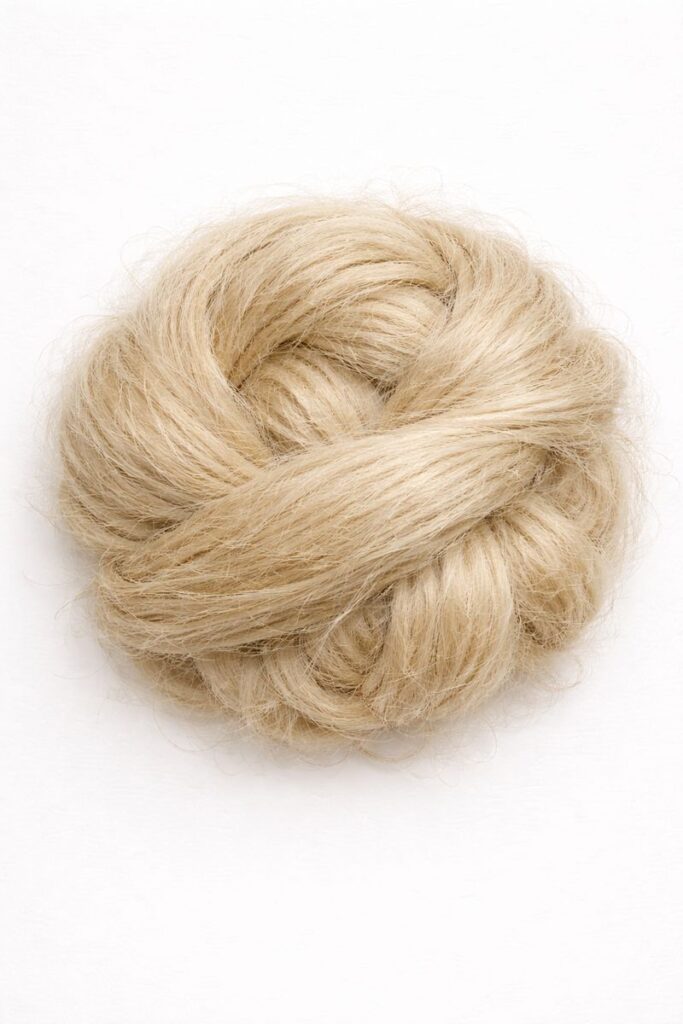
Flax is a natural plant-based fiber obtained from the stem of the flax plant. It is one of the oldest cultivated fiber crops in the world and has been used for thousands of years in textile production. Flax fibers are valued for their strength, breathability, and natural appearance and form the raw material used to produce linen textiles. Historically, flax was cultivated extensively in Europe and parts of Asia, where it played a central role in domestic and industrial textile production. Today, flax remains relevant due to its durability, low environmental impact, and close association with long-lasting, high-quality fabrics.

Production
Flax production begins with the harvesting of the flax plant when the fibers in the stem reach optimal maturity. The plants are pulled or cut and then subjected to retting, a controlled process that breaks down the pectins binding the fibers to the woody core of the stem. Retting can be performed using water, dew, or enzymatic methods, depending on climate and production requirements. After retting, the stalks are dried and mechanically processed through breaking and scutching to remove woody material. The fibers are then hackled to align and refine them before being spun into yarn. The quality of flax fiber depends heavily on retting precision and fiber length.
Use / Applications
Flax is primarily used as the raw fiber for linen textiles, but it also appears in applications where strength, breathability, and natural aesthetics are required. It is suitable for both apparel and interior uses, particularly in products designed for durability and comfort in warm conditions.
Common uses and applications include:
- Raw fiber for linen yarns and fabrics
- Apparel such as shirts, dresses, trousers, and summer garments
- Interior textiles including table linens, bedding, curtains, and upholstery
- Technical and industrial uses such as canvas, thread, and reinforcement materials
Properties & Aesthetic Qualities
Flax fibers are long, strong, and smooth, giving them a crisp hand feel and a natural matte appearance. They are highly breathable and absorb moisture efficiently, contributing to thermal comfort. Flax has very low elasticity, which results in fabrics that crease easily. Over time and with repeated use, flax-based textiles soften while maintaining their structural strength and characteristic texture.
Advantages & Limitations
Advantages
Flax fibers are exceptionally strong and durable and perform well in warm climates due to their breathability and moisture absorption. Flax cultivation generally requires fewer chemical inputs and less water than many other fiber crops, making it an environmentally responsible choice. Flax fibers age well and contribute to textiles with long lifespans and a natural, authentic aesthetic.
Limitations
Flax fibers have limited elasticity, which can reduce comfort in fitted garments and contribute to wrinkling. The production process requires careful timing and skilled processing, which can increase cost and limit large-scale availability. Flax fabrics may initially feel stiff or coarse before softening with use and washing.
Sustainability, Care & Variations
Flax is considered a low-impact crop, as it requires relatively little irrigation and typically fewer pesticides than other fiber plants. It is biodegradable and contributes to a long product lifecycle. From a care perspective, flax-based textiles benefit from gentle washing and moderate temperatures to preserve fiber integrity. Flax fibers are sometimes blended with other plant or regenerated fibers to improve softness, reduce creasing, or enhance drape while maintaining their natural strength and breathability.