

Jute
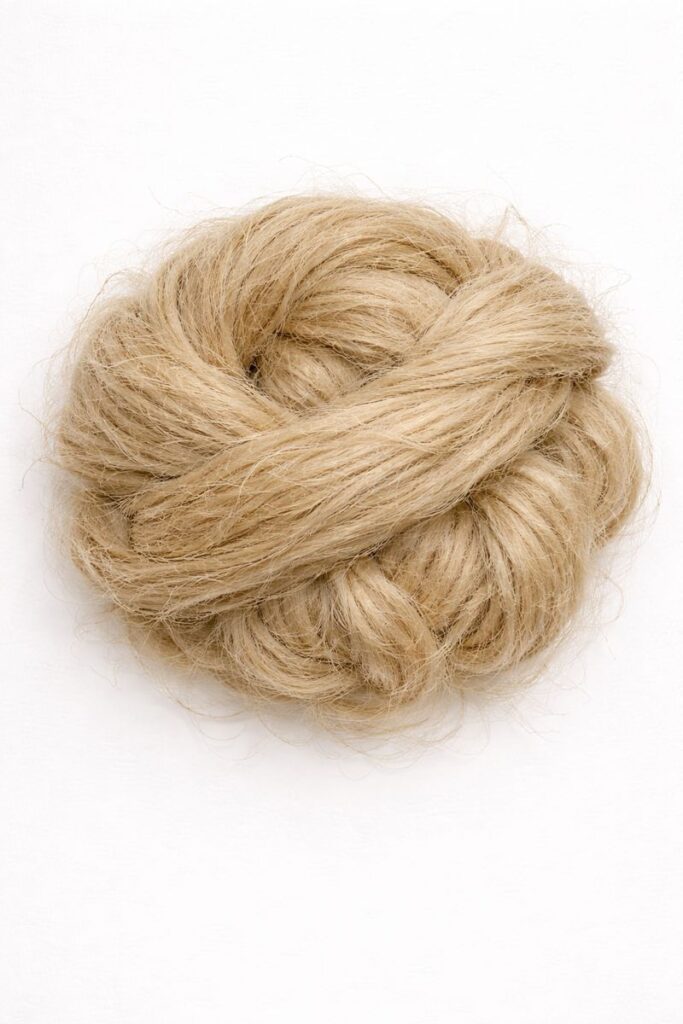
Jute is a natural plant-based fiber obtained from the stem of jute plants, primarily cultivated in warm and humid regions such as South Asia. It is one of the most widely produced natural fibers after cotton and is known for its strength, affordability, and coarse texture. Historically referred to as the “golden fiber,” jute has played a significant role in agricultural, industrial, and packaging textiles. While traditionally associated with utilitarian products, jute has increasingly found relevance in contemporary design and interiors due to its natural appearance and biodegradable nature.
Production
Jute production begins with harvesting the mature jute plants, after which the stems undergo retting, typically in slow-moving water. This process loosens the fibers from the woody core by breaking down natural binding agents. Once retting is complete, the fibers are stripped from the stems, washed, dried, and graded according to quality. The fibers are then spun into coarse yarns and woven into fabric or used directly in rope and twine production. Jute processing is relatively low-tech compared to many other fibers, which contributes to its affordability but also limits the fineness of the resulting textiles.
Use / Applications
Jute is primarily used in applications where strength, cost efficiency, and biodegradability are more important than softness or refinement. It is widely employed in industrial, agricultural, and interior contexts and is increasingly explored in decorative and sustainable design applications.
Common uses and applications include:
- Packaging materials such as sacks, bags, and wraps
- Ropes, twines, and cords
- Interior textiles including rugs, carpets, wall coverings, and upholstery bases
- Decorative fabrics and blended textiles for interior and accessory use
Properties & Aesthetic Qualities
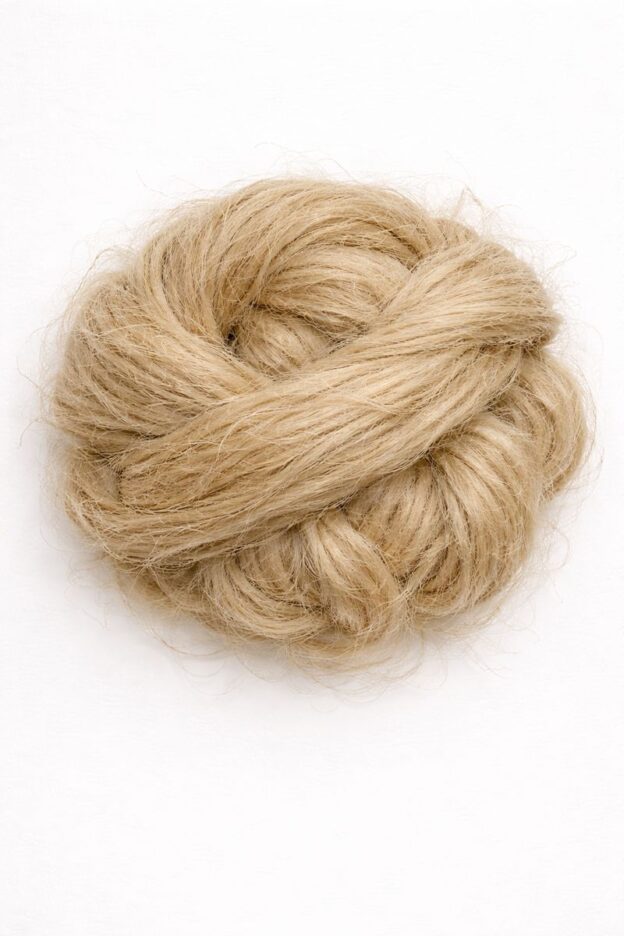
Jute has a coarse, dry hand feel and a natural golden-brown color, although it can be dyed or treated to alter its appearance. The fiber is strong with low elasticity and limited flexibility, which results in fabrics that are rigid and prone to creasing. Aesthetically, jute conveys a raw, organic character and is often used to emphasize natural texture and sustainability rather than comfort or refinement.
Advantages & Limitations
Advantages
Jute is a strong and durable fiber that is inexpensive and widely available. It is biodegradable and renewable and requires relatively low amounts of fertilizers and pesticides during cultivation. Jute fibers also contribute to soil health and have a low overall environmental footprint when responsibly produced.
Limitations
Jute has limited softness and flexibility, making it unsuitable for garments worn close to the skin. The fiber has low resistance to moisture and prolonged exposure to water, which can lead to weakening and degradation. Jute textiles are also prone to wrinkling and have limited durability in applications requiring frequent washing or abrasion.
Sustainability, Care & Variations
Jute is considered one of the most environmentally friendly natural fibers due to its rapid growth, low chemical requirements, and biodegradability. From a care perspective, jute products should be kept dry and cleaned gently, as moisture can weaken the fibers. Jute is often blended with other fibers such as cotton, wool, or synthetics to improve flexibility, softness, and durability, enabling its use in a broader range of textile and interior applications.