

Milk Casein
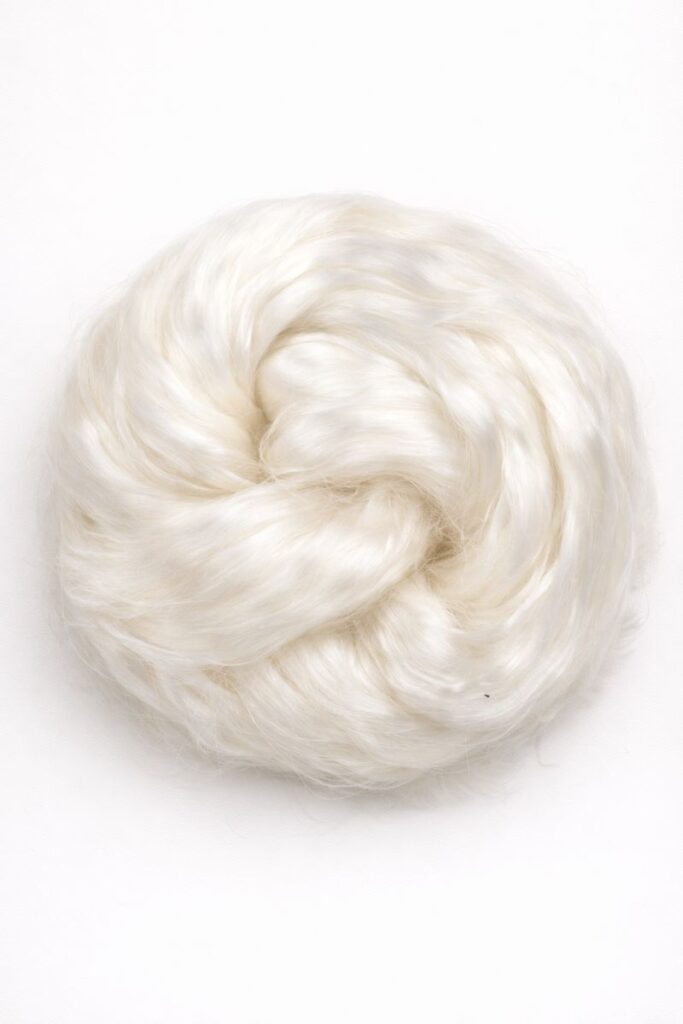
Milk casein is a regenerated protein-based fiber derived from casein, the main protein found in milk. The fiber was originally developed in the early twentieth century as part of efforts to transform agricultural byproducts into textile materials. Milk casein fibers are known for their softness, smooth surface, and silk-like handle. Although historically used during periods of material scarcity, milk casein has regained interest in contemporary textile development due to its biodegradable origin and association with bio-based innovation.
Production
Milk casein fiber production begins with the extraction of casein protein from skimmed milk, often using milk that is unsuitable for consumption. The casein is dissolved and chemically treated to form a viscous solution, which is then extruded through spinnerets to create continuous filaments. These filaments are solidified, washed, and spun into yarn. The production process involves chemical treatment to stabilize the protein structure, as untreated casein fibers would dissolve in water. Modern processes aim to reduce chemical intensity and improve fiber durability compared to early versions.
Use / Applications
Milk casein fibers are used in textiles where softness, smoothness, and skin comfort are primary considerations. Due to limited durability, the fiber is typically used in blends rather than as a standalone material.
Common uses and applications include:
- Apparel such as underwear, T-shirts, loungewear, and lightweight knitwear
- Baby clothing and textiles designed for sensitive skin
- Blended fabrics that emphasize softness and comfort
Properties & Aesthetic Qualities
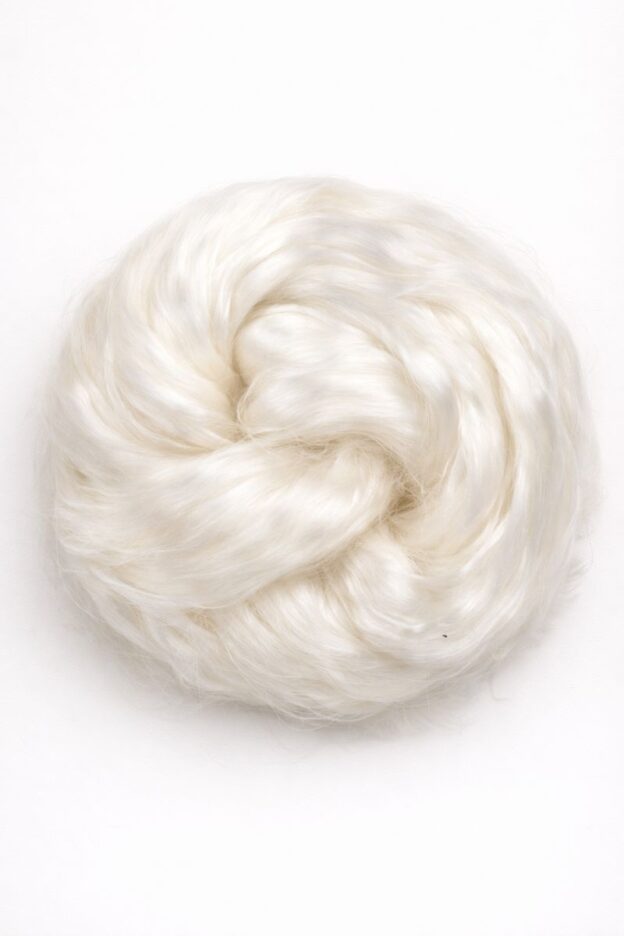
Milk casein fibers have a soft, smooth hand feel with a gentle luster similar to silk or fine viscose. The fiber drapes well and feels cool and comfortable against the skin. It has moderate breathability but limited strength, particularly when wet. Aesthetically, milk casein textiles appear refined and delicate, with a clean surface and subtle sheen.
Advantages & Limitations
Advantages
Milk casein fibers are derived from a renewable, bio-based resource and can utilize waste milk that would otherwise be discarded. The fiber is exceptionally soft and comfortable, making it suitable for garments worn close to the skin. Its smooth surface and gentle drape contribute to a refined and pleasant wearing experience.
Limitations
Milk casein fibers have relatively low durability and can be sensitive to moisture and repeated washing. The production process requires chemical treatment to stabilize the protein, which can affect environmental performance if not responsibly managed. Due to limited strength, the fiber is rarely used alone and often requires blending to improve performance.
Sustainability, Care & Variations
Milk casein fiber can contribute to waste reduction by utilizing surplus or non-consumable milk, but its overall sustainability depends on responsible chemical processing and energy use. From a care perspective, garments made with milk casein fibers should be washed gently at low temperatures to avoid fiber degradation. Milk casein is commonly blended with fibers such as cotton, viscose, or synthetic filaments to enhance durability, washability, and lifespan while retaining softness and comfort.