

Ramie
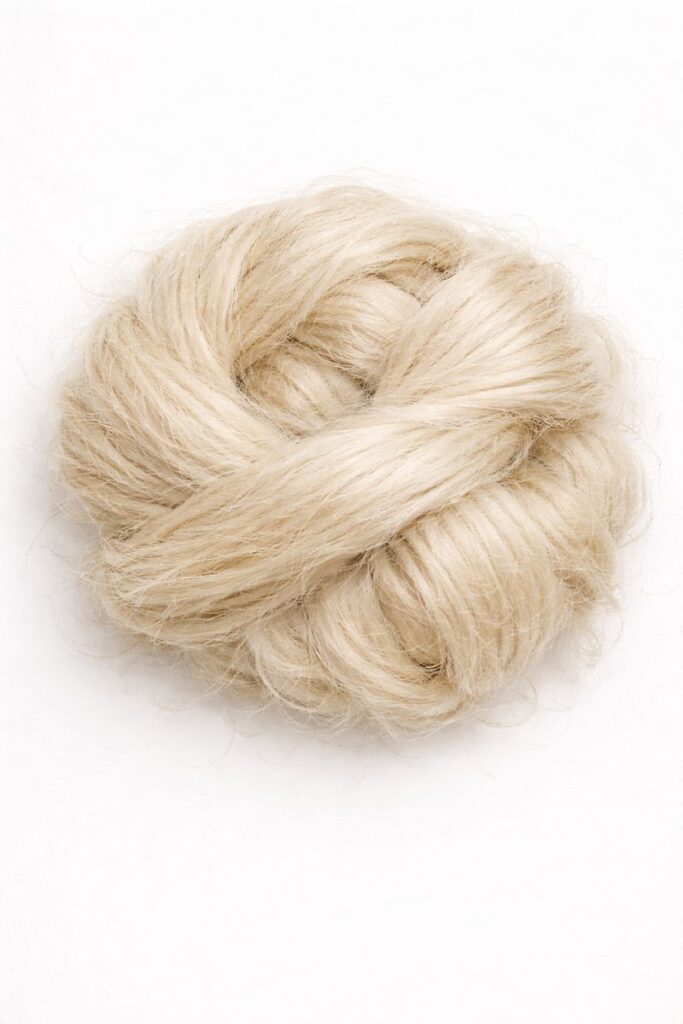
Ramie is a natural plant-based fiber obtained from the stalk of the ramie plant, which belongs to the nettle family. It is one of the oldest fiber crops in the world, with a history of use in East Asia dating back several thousand years. Ramie is valued for its exceptional strength, resistance to microbial growth, and natural luster. Although less common than cotton or flax, ramie is used in both traditional and contemporary textiles where durability and a crisp appearance are desired.
Production
Ramie production begins with harvesting the plant stalks when fiber quality is at its peak. The fibers are extracted through a process known as decortication, which removes the outer bark and separates the usable fibers from the woody core. Unlike flax or hemp, ramie fibers do not require retting, but they must be chemically or mechanically degummed to remove pectins and gums that bind the fibers together. After degumming, the fibers are washed, dried, and spun into yarn before being woven or knitted into fabric. The degumming process is complex and contributes to the higher cost of ramie textiles.
Use / Applications
Ramie is used in textiles that require strength, dimensional stability, and a crisp surface. It is often applied in warm-weather garments and interior textiles and is commonly blended with other fibers to improve flexibility and comfort.
Common uses and applications include:
- Apparel such as shirts, blouses, dresses, and summer garments
- Interior textiles including table linens, curtains, and upholstery fabrics
- Fabric constructions such as plain weave ramie, blended fabrics, and textured textiles
Properties & Aesthetic Qualities
Ramie fibers are strong and stiff with a smooth surface and a natural sheen similar to silk. The fiber is highly absorbent and breathable, making it comfortable in warm climates. Ramie has very low elasticity and tends to wrinkle easily. While it maintains its shape well, the stiffness of the fiber can limit drape and softness unless blended or specially finished.
Advantages & Limitations
Advantages
Ramie is one of the strongest natural fibers and retains its strength even when wet. It is resistant to mold, mildew, and bacterial growth and holds its shape well over time. Ramie has a bright, clean appearance and accepts dyes well, contributing to a refined visual quality in textiles.
Limitations
Ramie has limited elasticity and flexibility, which can reduce comfort and drape in garments. The fiber is prone to wrinkling and can feel stiff or brittle if not properly processed. The degumming process required to make ramie suitable for textiles is labor-intensive and costly, limiting its widespread use.
Sustainability, Care & Variations
Ramie is a renewable plant fiber with high yield potential, as the plant can be harvested multiple times per year. It requires relatively little water and fewer pesticides compared to some other fiber crops. From a care perspective, ramie textiles should be washed gently to avoid fiber breakage and excessive creasing. Ramie is frequently blended with fibers such as cotton, viscose, or wool to improve softness, flexibility, and wearability while retaining its strength and luster.