

Bound Hem
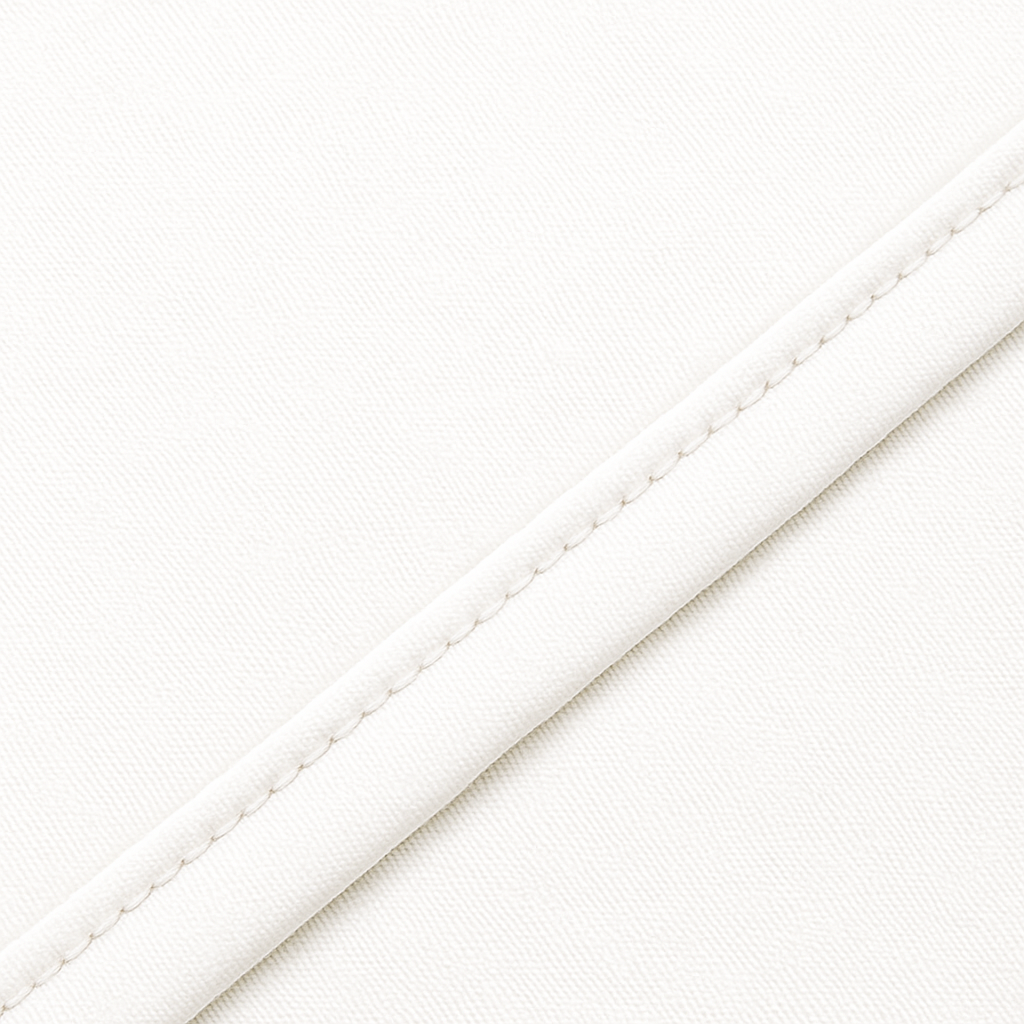
A bound hem is a clean and durable finishing method where the raw edge is enclosed with binding, often bias tape. This technique works on both woven and knit fabrics, straight or curved hems, and gives a neat interior finish that can also serve as a decorative detail if contrasting binding is used. It adds strength and weight to the hem, prevents fraying, and can make garments reversible since both sides appear polished. Commonly applied to necklines, armholes, hems, cuffs, plackets, and accessories, it is a versatile and high-quality edge finish.
Main Properties
- Resistance: Very good.
- Strength: Very good.
- Versatility: Very good.
It works in almost any fabric (woven and knit), either for straight or curved hems. - Flexibility: Regular.
- Elasticity: Poor.
- Poor elongation recovery.
- Cost: Medium to high.
Common Uses
- High-quality garments.
- Curved hems and edges cut on the bias.
- Necklines.
- Armholes (sleeveless garments)
- Bottoms and cuffs.
- Narrow plackets.
- Opening edge of patch pockets.
- Reversible garments.
- Bags and accessories.
Related Seams

Step By Step

Step 1
Stitch
Unfold one side of the binding and attach it to the edge of the fabric facing the right sides together. Then sew along the crease line of the binding.

Step 2
Fold Up
Open the binding and the fabric towards the right side.

Step 3
Fold Up
Sew along the interior edge of the binding.

Step 4
Final

Facts
- Also known as Hong Kong Finishing.
Good choice to add extra weight to the hem. - The binding protects seam allowances from fraying and adds a decorative touch if using a contrasting or coordinating color.
Neat finishing on the inside. - Hem-Width is usually between 7 and 10 mm wide (in inches: 0.25″ to 0.4″). See group H150 for wider hems.
- Reversible: the wrong side can be used as the right side.
- The binding requires the same care techniques as the fabric.