

Exposed Piping/Bound
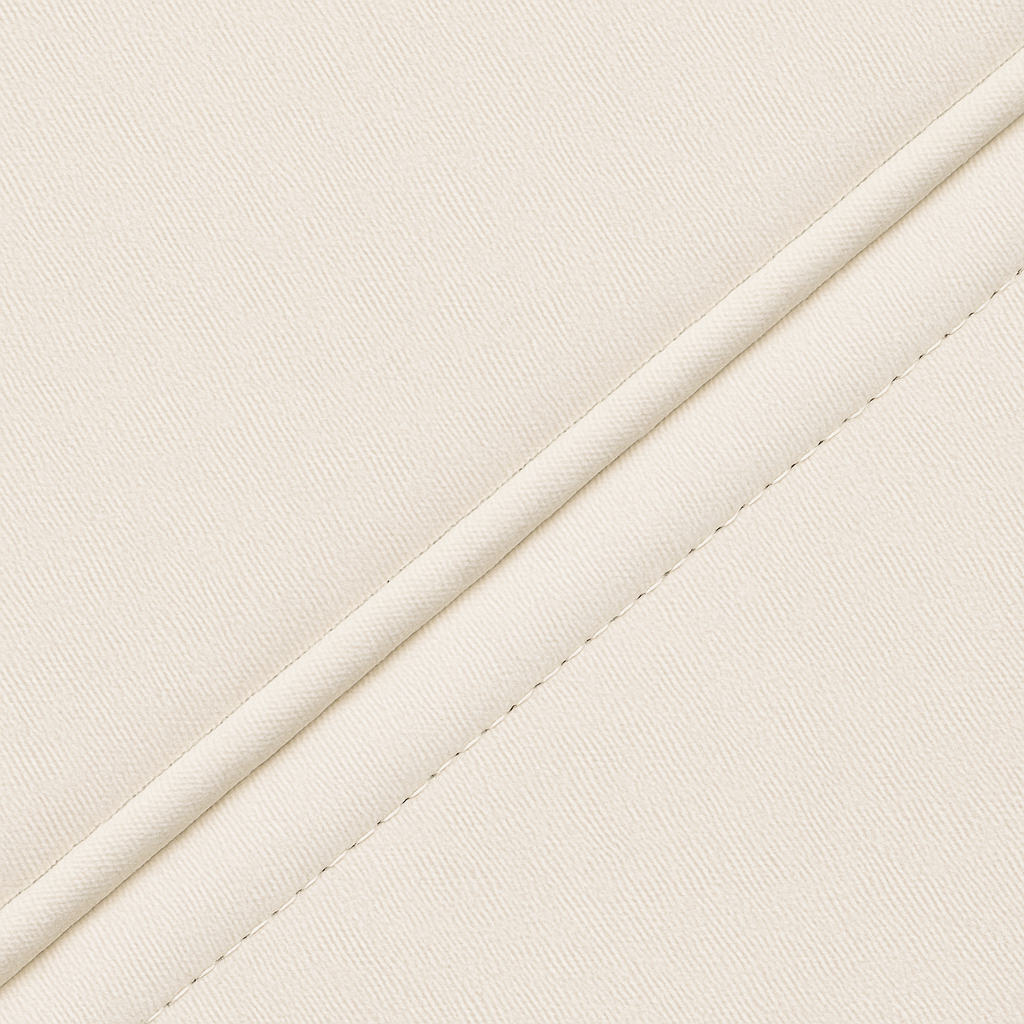
Exposed piping is a decorative and functional finish where a cord-covered strip of fabric (piping) is sewn into a seam, leaving the rounded edge visible on the outside. In this variation, the piping is bound for extra durability and stability, while a basic topstitch secures the seam and adds a visible detail on the garment’s surface. An understitch is applied to keep the facing or binding neatly turned to the inside, preventing it from rolling out. This method creates a clean, professional look with added strength, making it ideal for necklines, armholes, waistbands, and design details where both function and decoration are important.
Main Properties
- Resistance: Very strong.
- The piping and binding stabilize the edge and add a decorative touch
- It is a good choice to add weight to the hem.
- Neat finish on the inside.
- Cost: Regular.
Common Uses
- High-quality garments.
- Reversible garments.
- Pyjamas.
- Neckline and armhole.
- Narrow plackets.
- Opening edge of patch pockets.
Related Seams

Step By Step

Step 1
Stitch
Unfold one side of the binding and attach it to the edge of the piping and the fabric, facing the right sides together. Sew along the crease line of the binding.

Step 2
Understitch
Fold-down the binding and sew it along the edge.

Step 3
Fold Up
Open the seam to the right side of the fabric.

Step 4
Topstitch
Sew along the interior edge of the binding.

Step 5
Final

Facts
- Also called “Piped Edge Finish.
- Combines decorative piping with structural binding.
- Topstitch secures the seam and highlights the edge.
- Understitch keeps the facing neatly inside.
- Adds strength and prevents rolling or distortion.
- Commonly used on necklines, armholes, waistbands, and trims.
- Can be made subtle (tone-on-tone) or bold (contrasting color).
- High-quality finish often seen in tailored garments and accessories.