

Felled Seam
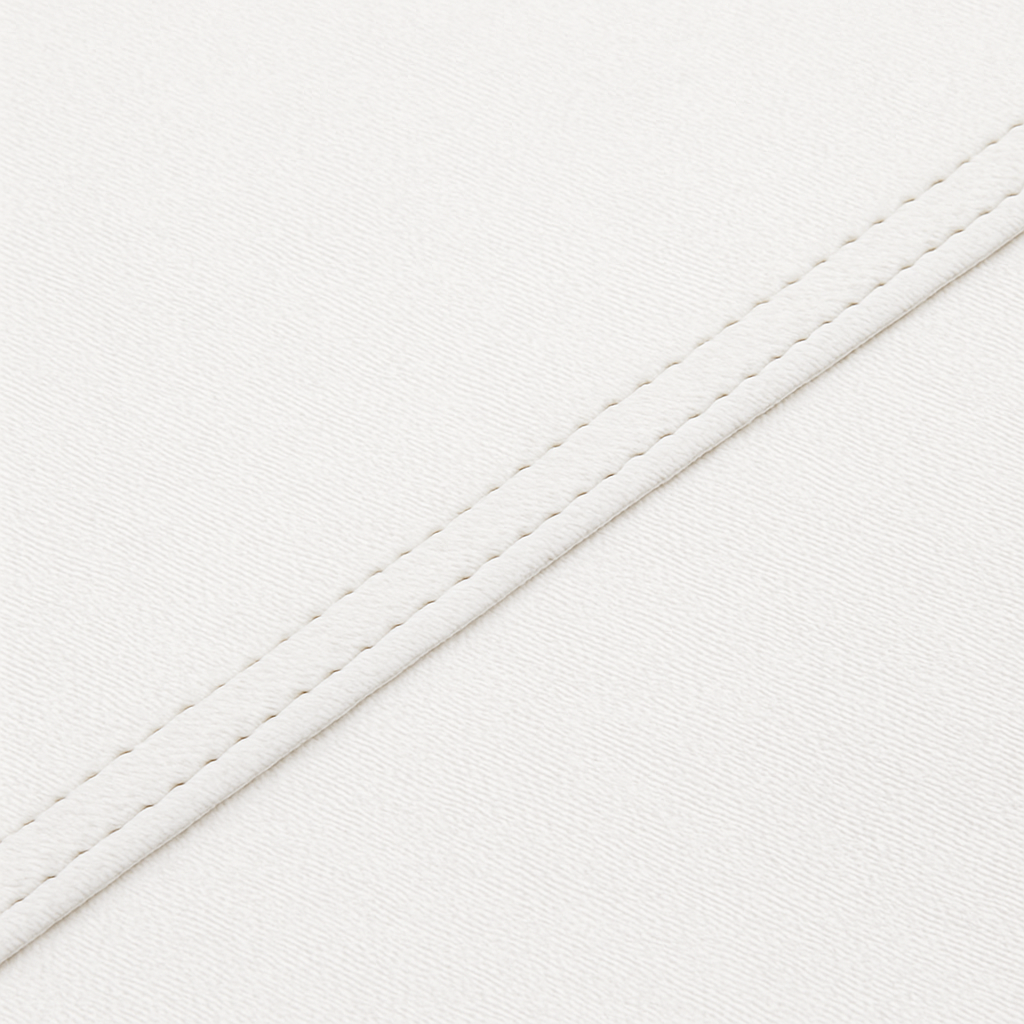
The felled seam, also called flat-felled, is strong and durable with two visible lines of stitching on the outside. Both seam allowances are folded and enclosed, making it resistant to fraying. Commonly used in denim and workwear, it adds reinforcement and a structured look.
Main Properties
- Resistance: Good to very good.
It is stronger when adding a topstitch. - Versatility: Excellent. It is suitable for any fabric (woven and knit) and either on straight or curved seams.
- Flexibility: Good to very good.
- Elasticity: Good to excellent. The elasticity increases when it is sewn with overlock stitch, cover stitch or flatlock stitch.
- Cost: Low.
Common Uses
- General purposes such as shoulder seam and curved seams.
- Suitable for most types of clothing and accessories:
Lined garments and no-exposed seams or edges. - Ready-to-wear garments.
Sportswear.
Children’s clothing.
Related Seams

Step By Step

Step 1
Stitch
Sew the fabrics along the seam allowance and facing the right sides together.

Step 2
Fold Up
Open the seam towards the right side.

Step 3
Fold Up
Sew along the seam line.

Step 4
Topstitch
Sew the topstitch parallel to the previous one.

Step 5
Final

Facts
- Also called “Flat Felled Seam”, “Self Bound Seam”, “English Seam” or “Dobbeltsøm” in Danish.
- Neat finish on the inside.
- The binding must have the same care techniques as the fabric.
- Reversible.
- In the industry, it is made by one only step.
- It prevents the seam allowance from fraying.