

Welt Seam
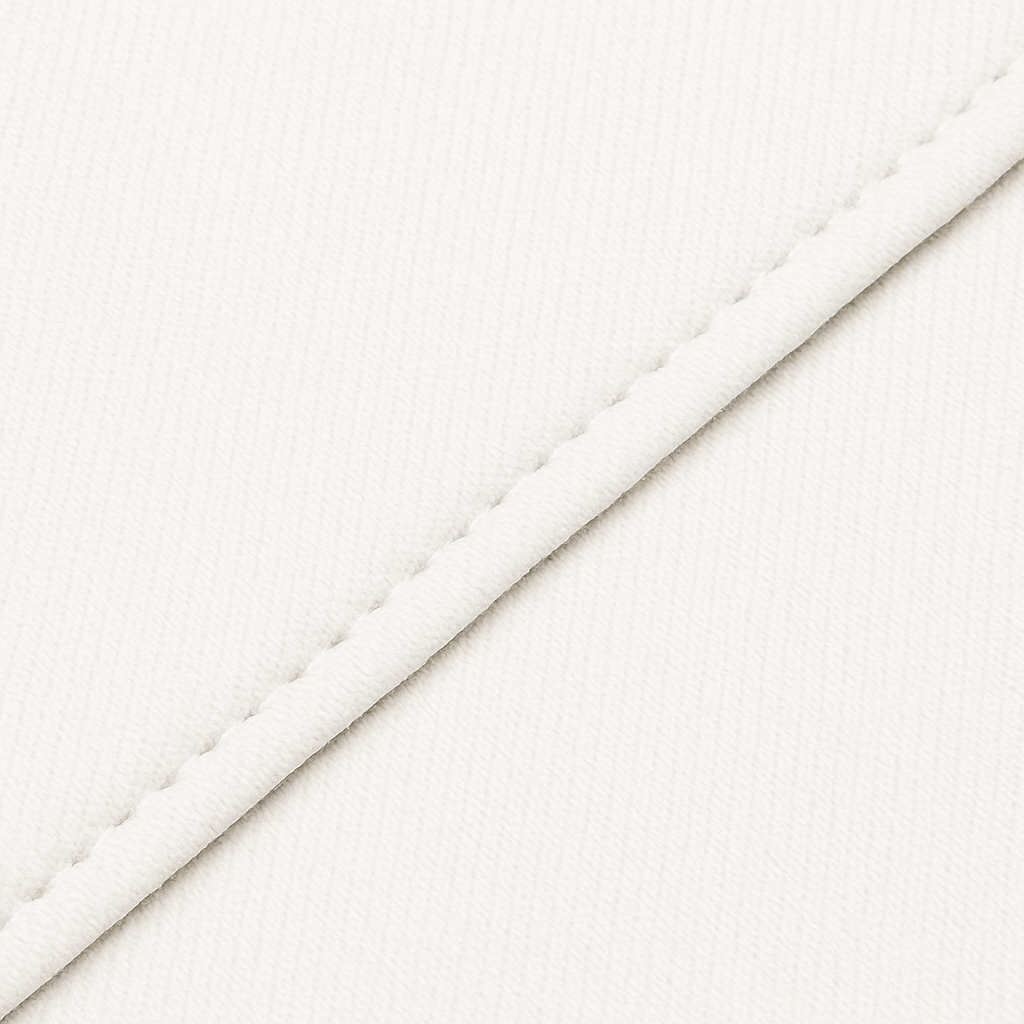
A welt seam, encloses the raw edges by folding one seam allowance over the other and stitching it in place. This creates a clean, durable finish with two visible rows of stitching on the outside. It is commonly used in denim, outerwear, and reversible garments where both strength and a polished appearance are required.
Main Properties
- Resistance: Very good to excellent.
- Versatility: Good.
It works better on medium-weight fabrics. - Flexibility: Poor to regular.
- Elasticity: Poor.
Stretch resistance. - Cost: Regular.
Common Uses
- Give more strength to the seam.
- Decorative touch if using a contrasting or coordinating color.
- High quality garments.
- Unlined jackets, coats and outwear in general.
- Reversible garments.
- Neckline seam of t-shirts and polos (also see CD101 and CE101).
Related Seams

Step By Step

Step 1
Stitch
Sew along the edge facing the right side together. The seam allowance of the fabric underneath is twice wider than the upper one.

Step 2
Fold Up
Fold up the longer seam allowance towards the shorter one.

Step 3
Fold Up
Open the seam towards the right side of the fabric.

Step 4
Topstitch
Sew along the folded edge.

Step 5
Final

Facts
- Also called “Flat Felled Seam”, “Self Bound Seam”, “English Seam” or “Dobbeltsøm” in Danish.
- Neat finish on the inside.
- The binding must have the same care techniques as the fabric.
- Reversible.
- In the industry, it is made by one only step.
- It prevents the seam allowance from fraying.